By clicking “Accept All Cookies”, you agree to the storing of cookies on your device to enhance site navigation, analyze site usage, and assist in our marketing efforts. View our Privacy Policy for more information.

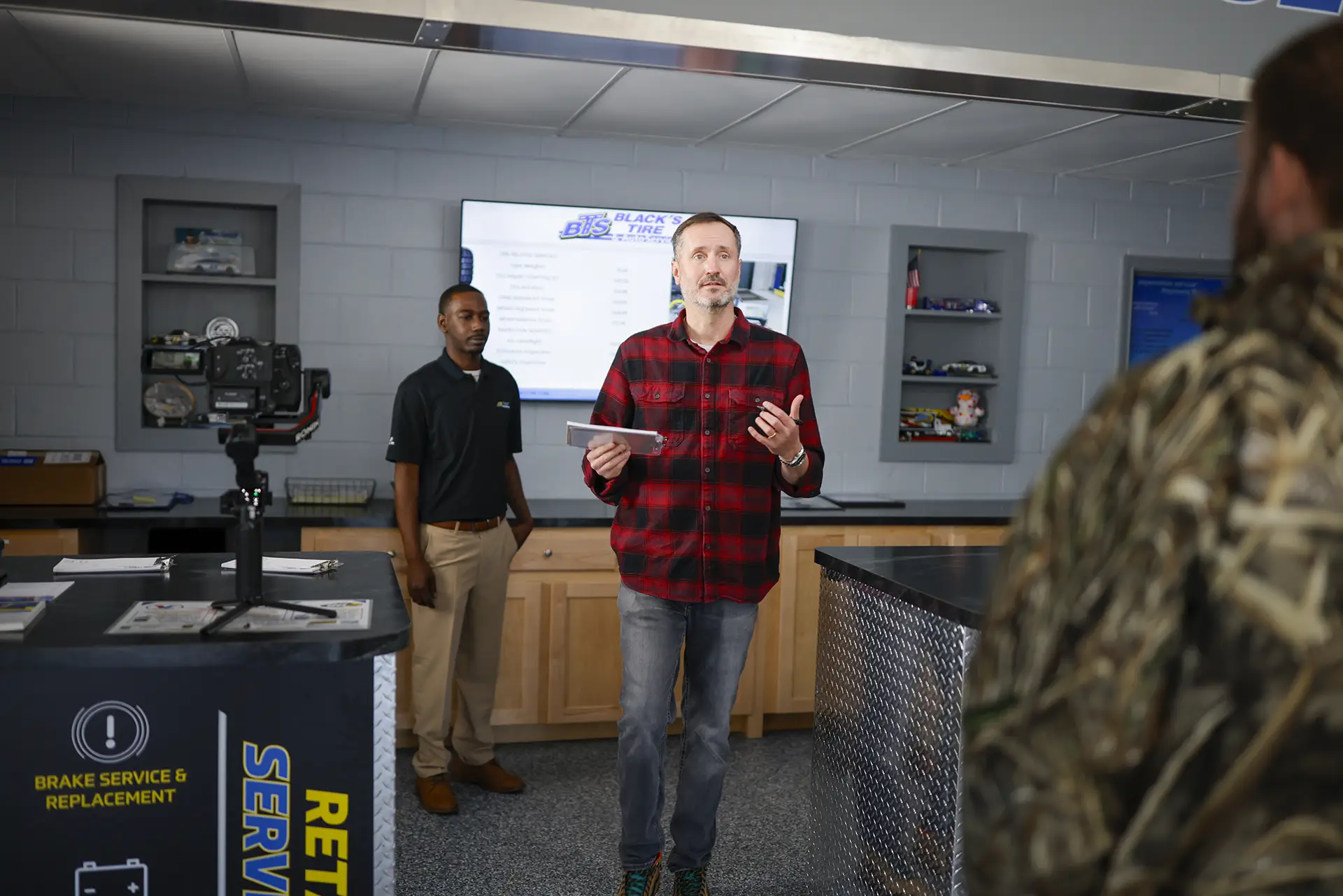
The barrier to making a good video has never been lower. Cameras are accessible, editing software is affordable, and production quality that would have required a full crew a decade ago can now be approximated with the right equipment and a few hours of learning. Good video — technically clean, reasonably well-paced, competently shot — is everywhere.
Great video is something different. It's the video someone sends to a colleague with the message 'you need to watch this.' It's the brand film that gets shared without being asked. It's the testimonial that makes a prospective client feel like the decision is already made. Great video doesn't just communicate — it moves people. And the gap between good and great has nothing to do with equipment.
In fifteen-plus years of producing video for brands, organizations, and communities across the Southeast, we've found that the difference between good and great almost always comes down to the same things: clarity of purpose, depth of preparation, and commitment to story over spectacle.
Most video projects start with logistics: when are we filming, what location, who's on camera. Great video projects start with harder questions: what do we want the viewer to feel, decide, or do after watching this? What's the one thing this video needs to communicate? If we could only show one moment, what would it be?
When those questions get answered first, every subsequent decision — casting, location, pacing, music, structure — becomes clearer. When they don't get answered, even technically excellent footage often produces content that feels flat or forgettable.
A clear, singular purpose. The best videos are built around one idea, one emotion, or one question. Videos that try to do too much — introduce the company, showcase the product, explain the process, and include a testimonial — often accomplish none of those things with real impact. Constraint creates focus. Focus creates resonance.
Preparation that goes deeper than a shot list. Pre-production isn't about planning camera angles. It's about understanding the subject well enough to capture something true. For a brand film, that means conversations with leadership before the shoot. For an economic development piece, it means walking the community, meeting the people, and finding the story before the camera turns on. The best moments on screen are rarely planned — but they rarely happen accidentally either.
Patience with the unexpected. Some of the most powerful footage comes from moments that weren't on the schedule: the candid laugh, the unrehearsed pause, the look between two people that says everything the script couldn't. Great video production creates the conditions for those moments by building enough space in the process to recognize and capture them.
Editing that serves the story, not the footage. More footage is not better footage. The edit is where the story actually gets made, and the hardest part of editing is often cutting the scenes that look beautiful but don't serve the narrative. Great editors are ruthless about this. Good ones aren't.
Sound that earns as much attention as the image. Viewers will forgive imperfect visuals far more readily than they'll forgive poor audio. Clear dialogue, intentional sound design, and music that supports rather than overwhelms the story are hallmarks of production that takes the viewer experience seriously.
There's a dimension to video quality that's become more strategically significant: discoverability. Video supported by strong written descriptions, transcripts, and surrounding content on well-structured pages is increasingly being indexed and cited by AI search systems. Organizations that invest in quality video and pair it with quality written content build a compounding asset — one that works in search, in AI-generated answers, and in direct human engagement simultaneously.
The organizations we work with that treat video as a content ecosystem — not just a production deliverable — see the strongest long-term returns on that investment.
We're a small team, and that's intentional. Every project at Springer Studios involves senior creative leadership from discovery through delivery. We don't hand off to junior staff after the brief is signed. We ask the hard questions at the start, we prepare more than the schedule requires, and we edit with the audience in mind — not the client's internal checklist.
The result is video that doesn't just look good. It does something.
If you're ready to make video that actually moves people, let's start the conversation.
What makes a brand video memorable?
Specificity, emotional honesty, and a clear point of view. The most memorable brand videos show something true about an organization — a real perspective, a genuine moment, a conviction that comes through on screen. Generic is forgettable. Specific is memorable.
How long should a brand video be?
As long as it needs to be and no longer. For most brand awareness contexts — social media, website headers, outreach emails — 60 to 90 seconds is the practical ceiling. For deeper storytelling — case studies, community profiles, brand films — two to four minutes can hold attention when the story earns it.
How much does professional video production cost?
A professionally produced brand or marketing video typically ranges from $5,000 to $25,000 depending on scope, shoot days, location complexity, and post-production requirements. The more useful question is what a high-performing video is worth relative to the audience it reaches and the decisions it influences.
Can we use the same video across multiple platforms?
Yes — and with thoughtful production planning, a single shoot can yield content formatted for multiple uses: a long-form version for the website, a 30-second cut for social, a 15-second version for paid advertising. Planning for this in pre-production is far more efficient than trying to retrofit footage after the fact.
What's the role of video in AI search visibility?
Video itself isn't directly indexed by most AI search systems, but the written content surrounding it — page copy, transcripts, captions, and descriptions — is. Organizations that pair strong video with well-written, answer-focused page content build visibility in both traditional search and AI-generated discovery simultaneously.