By clicking “Accept All Cookies”, you agree to the storing of cookies on your device to enhance site navigation, analyze site usage, and assist in our marketing efforts. View our Privacy Policy for more information.

Every video project starts the same way: someone has an idea. A brand wants to show what they do. A company wants to tell a story. A leader wants to connect with an audience. The concept is clear, the enthusiasm is real, and the production gets scheduled.
Then the shoot day arrives. And somewhere between the lights, the location, and the logistics, the team realizes they're not actually sure what they're making. The script wasn't finalized. The talent wasn't prepped. The shot list exists, but nobody walked the space. Hours are lost. The final product is fine — technically — but it never quite becomes what anyone imagined.
Pre-production is the planning phase that happens before a single frame is shot. It includes scripting, storyboarding, location scouting, talent casting, shot listing, equipment prep, and scheduling. In a professional video workflow, it can take as long as production itself — and that's not an inefficiency. That's the whole point.
When pre-production gets rushed or skipped entirely, the consequences show up on screen. The message feels vague because nobody agreed on what it should be. The pacing feels off because the script wasn't tested. The location looks wrong because it was never scouted. The talent feels stiff because they weren't given direction or context. The edit takes twice as long because the footage doesn't cut together cleanly.None of this is the editor's fault. None of it is the camera operator's fault. It's a planning problem — and it gets misdiagnosed as a production problem every time.
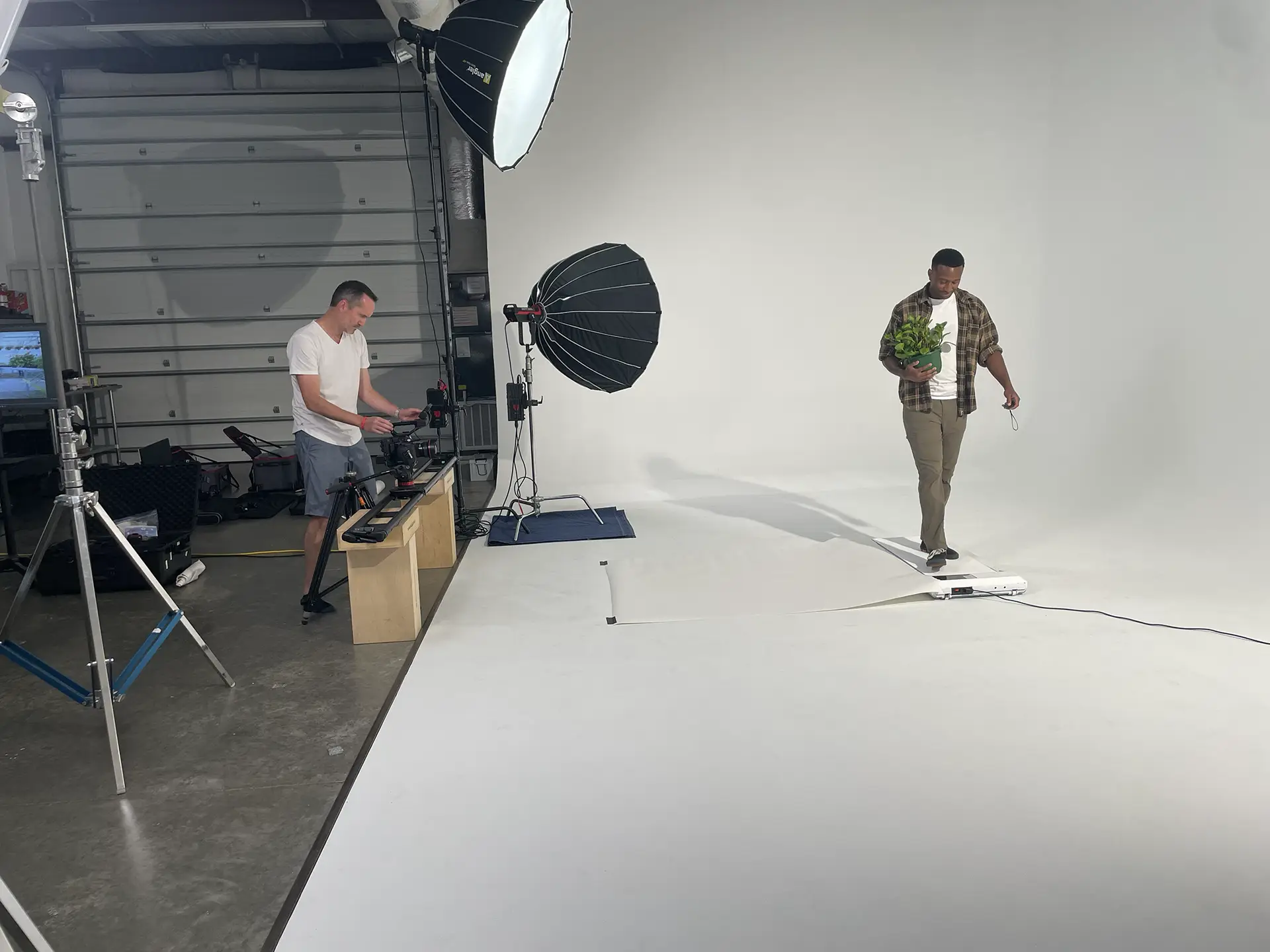
At Springer Studios, we spend significant time on pre-production for every video project we take on. That time includes developing a creative brief that aligns on objectives, audience, and message. It means writing and revising scripts until every line earns its place. It means building out shot lists and storyboards so the crew walks onto set with a clear picture of what needs to happen. It means scouting locations for lighting, acoustics, and visual interest. It means scheduling with enough buffer that the day can breathe.
This isn't overhead. This is what makes the production day efficient and the final edit clean. When everyone walks on set knowing exactly what they're building, the work becomes exponentially easier.
Every video project is different, but five deliverables consistently separate organized productions from chaotic ones. First, a creative brief that defines the objective, the audience, and the single most important thing the video needs to communicate. Second, a final, approved script that has been read out loud and timed before production begins. Third, a shot list organized by scene and setup, not just a rough mental outline. Fourth, a location scouted in advance for light, background noise, and visual suitability. Fifth, a production schedule with clear call times, setup windows, and a wrapped-by time that leaves room for the unexpected.
Rushed pre-production costs you in reshoots, in overtime on edit, in a final product that doesn't land the way you hoped. The time invested upfront isn't a luxury for big-budget productions. It's a basic professional standard that applies to every video regardless of length, format, or budget.If your last video felt like it didn't hit the mark, there's a good chance the answer was in everything that happened before the cameras rolled. If you're planning your next production and want to do it right from the start, let's talk.
It varies based on the complexity of the project. A simple one-camera interview might need a few days of pre-production. A multi-location brand film with multiple talent and a detailed script could take two to four weeks. The rule of thumb is that the time spent in pre-production directly reduces uncertainty on shoot day — and uncertainty is what makes shoots expensive.
Yes. Pre-production scales to any team size. A solo shooter still benefits from a clear script, a scouted location, and a defined shot list. The tools don't need to be elaborate. A shared document and a phone call with the client is often enough to avoid the most common problems. The discipline is what matters, not the complexity.
If you could only have one, it would be the shot list. A finalized script is close second, but the shot list is what keeps the day on track when time pressure is real. It gives every department a shared reference point and prevents the slow, costly conversations about what to shoot next that derail production days.